Cockroach control requires distinct biological tactics based on the invading species and structural age. In older residential pockets like Enos Park and Vinegar Hill, stone and brick foundations frequently allow…
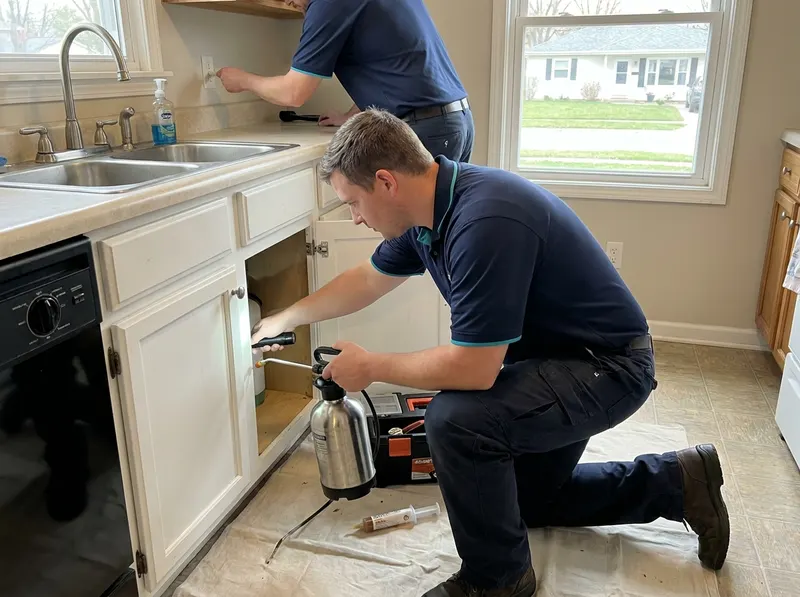
Cockroach control requires distinct biological tactics based on the invading species and structural age. In older residential pockets like Enos Park and Vinegar Hill, stone and brick foundations frequently allow Oriental cockroaches (Blatta orientalis) to migrate upward from damp crawlspaces and street-level catch basins. These damp-loving insects thrive in relative humidity above 70% and enter basements through perimeter foundation cracks and unsealed floor drains. Conversely, in dense residential neighborhoods such as Hawthorne Place or multi-unit dwellings near Jerome and Southern View, German cockroaches (Blatella germanica) represent 90% of indoor kitchen infestations. These pests reproduce every 30 to 40 days, laying oothecae holding up to 40 nymphs, and hide exclusively within narrow harborage gaps under 3 millimeters wide behind refrigerators, ovens, and hollow cabinet hinges.
Over-the-counter aerosol bug bombs scatter aggregations deeper into interior wall studs, electrical conduits, and ceiling voids, worsening the infestation through chemical dispersal. Professional defense relies on non-repellent gel matrices containing abamectin, indoxacarb, or dinotefuran paired with pyriproxyfen insect growth regulators (IGRs). This combination prevents surviving nymphs from reaching sexual maturity while adult roaches transfer active bait throughout the central harborage via mutual contact and coprophagy. Clean application occurs inside closed mechanical voids and hidden cabinetry recesses, preventing human, dog, or cat contact while remaining active for 90 days.
Properties near high-water zones like Lake Springfield or older drainage infrastructure along the Historic West Side encounter American cockroaches (Periplaneta americana), which inhabit sewer lines and basement sump crocks. A structural clean-out addresses these entrance pathways by installing hardware mesh over floor drains and injecting micro-encapsulated perimeter barriers around foundation perimeters. When property owners weigh single-visit treatments against a 60-day targeted protocol, single visits clear only current foraging adults; the trade-off is that unhatched egg cases emerge 3 weeks later without residual growth regulators to arrest them. A dedicated two-visit cycle confirms that secondary nymph hatches ingest residual active ingredient, protecting food storage and electrical switches from re-infestation.
Every job gets a firm, written price after a free on-site visit.
Tell us about your cockroach control job in Springfield and we'll send a clear, written quote, usually the same day.
 Havero Pest Protection